Kubernetes Workload Rightsizing: Mistakes That Waste 40-60% of Your Cloud Budget (And How to Fix Them)

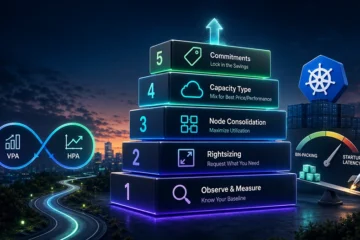
Six specific, procedural mistakes drain 40-60% of Kubernetes compute spend, overprovisioned defaults, copy-pasted environment configs, quarterly review gaps, uncoordinated HPA/VPA, one-time rightsizing projects, and missing cost attribution. Covers a 4-week rollout plan, how stateful workloads need different rules, and the FinOps metrics that prove it worked.

Kubernetes Capacity Planning: A Risk-Aware Framework for Rightsizing Without Downtime

Kubernetes capacity planning fails when teams treat it as a one-time sizing exercise instead of a continuous process. This article gives you a risk-aware framework for setting resource requests and limits, a decision tree for choosing between rightsizing and autoscaling, a 30-60-90 day rollout plan, and how automated platforms like Zesty remove the manual guesswork entirely.

Pod Rightsizing: Why It Fails to Reduce Kubernetes Costs

Accurate pod requests improve scheduling and stability, but Kubernetes treats requests as hard reservations rather than forecasts, so waste still accumulates through HPA headroom, minReplicas buffers, and node-level fragmentation. Zesty’s MDA, APP, and FastScaler close these gaps by keeping pod sizing, placement, and spike protection continuously aligned with real usage.

K8s Resource Optimization: 5 Proven Strategies That Actually Work in Production

Five Kubernetes resource optimization strategies, each as the standard advice, the hidden challenge it misses, and the fix: requests and limits rightsizing, autoscaling, node management, multi-tenancy, and cost intelligence. Shows where the Vertical Pod Autoscaler, Horizontal Pod Autoscaler, Kubernetes Event-Driven Autoscaling (KEDA), and Karpenter conflict at the seams, and what closes those gaps.

Kubernetes Cost Optimization: Complete Guide To K8s Cost Management For 2026

Kubernetes waste runs 30-45% of cluster spend, from four sources: overprovisioned compute, cross-Availability Zone (AZ) data transfer, logging overhead, and idle non-production environments. Purchasing, monitoring, and logging fixes recover the first 30-40% without architecture changes, and autoscaling and data transfer changes recover more. Visibility tools show where the waste is, and automation acts on it.

The 6 Best Kubernetes Cost Optimization Tools for 2026: Benchmark & Buying Guide

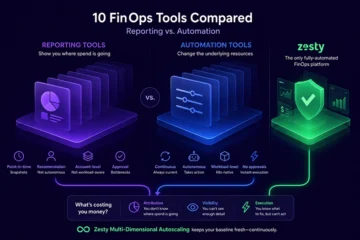
Kubernetes cost optimization tools split into three categories, not one undifferentiated list: autonomous platforms that act automatically, FinOps visibility tools that report but don’t fix, and specialized utilities that solve one narrow problem. This guide benchmarks six tools across those categories, gives a self-diagnostic to identify which one fits your cluster, and closes with a decision framework and final recommendations.